Back pain during pole inverts: prepare before you tip back
Back pain during pole inverts: when to stop, what preparation can help, exercises to discuss with your instructor and how Coquet organises your prep.
Should your back hurt when you invert?
Back pain during pole inverts is a reason to stop that attempt and reassess, not to kick harder. Preparation can build pulling strength, trunk control and coordination, but it cannot identify the cause of pain or guarantee prevention. Repeated pain needs an individual assessment before you resume loaded upside-down practice.
General information, not medical advice or a rehabilitation plan. If you already have pain, ask a clinician which exercises and loads are appropriate for you.
This guide covers a basic pole invert or chopper, not an inversion table, a shoulder mount or a handspring. You do not need to earn your place in a class by getting upside down. A preparation session can be the whole session.
Pain first, technique second
Stop the movement that brings on pain and tell your instructor when it happens: the initial pull, the tip back, the hold or the descent. Do not repeat the painful entry just to film a clearer example. Write down whether symptoms travel into a limb and whether they persist after class.
NHS back-pain guidance recommends emergency assessment for back pain with new bladder or bowel changes, numbness around the genitals or anus, or symptoms affecting both legs. Serious trauma also needs urgent assessment. Sudden severe or rapidly worsening pain, or pain with fever or feeling unwell, needs prompt medical advice. Seek assessment for persistent or recurring symptoms.
Stopping painful inverts does not mean avoiding all movement. Guy's and St Thomas' physiotherapists recommend maintaining tolerable activity and building it gradually. Everyday movement and a heavily loaded invert are different demands; ask what you can keep doing rather than assuming either complete bed rest or another full class is the answer.
Why an invert can expose a preparation gap
An invert combines a pull, a leg lift and a change of body orientation. These demands have to work together. You can have strong abdominal muscles and still need help coordinating the entry. Equally, pain is not proof that your core is weak or that a particular muscle is injured.
Physiotherapist Simone Muscat's Anatomy of a Straddle explains the changing pull and pelvic control involved. Bent knees shorten the lever compared with straight legs. Those mechanics support teaching a manageable progression; they do not diagnose the reason your back hurts. A visible arch is a coaching observation, not a scan of the tissues underneath.
Ask your instructor to observe the following without reproducing pain:
- Are you lifting into the entry, or using a large jump to get past the part you cannot control?
- Does control change when you start to straighten your legs?
- Can you maintain the intended shoulder and trunk position without holding your breath or straining?
- Is the exit planned, or do your legs drop when you tire?
A descent is loaded work too. Do not add slow invert negatives as a universal fix for pain on the way down. If that phase hurts, asking it to last longer is not a sensible first experiment. A teacher can choose a different exit; a clinician can assess painful loading.
What prevention research actually tells us
A 2022 survey by Szopa and colleagues found associations between training volume and injury in female pole dancers. A survey cannot establish that a particular movement caused an injury or that a named drill prevents one. It supports looking at total workload rather than counting only successful inverts.
There is no validated number of tucks, plank seconds or completed app sessions that guarantees a pain-free invert. We have not identified a clinical trial showing that Coquet's preparation program prevents invert-related back injuries. The exercise examples below are general conditioning choices, not an evidence-proven injury-prevention protocol.
Preparation exercises to discuss with your instructor
These examples are for a person who can perform them comfortably and has no medical restriction. They are not exercises to push through an active back-pain episode. The small starting doses are illustrative, not a prescription. Choose appropriate options with your instructor or physiotherapist; stop if pain appears, symptoms spread or control breaks down.
| Exercise | A manageable starting example | What to practise | Make it easier |
|---|---|---|---|
| Dead bug or heel slide | 1 set of 4 slow repetitions each side | Move a limb through a comfortable range while keeping the trunk quiet and breathing | Keep arms resting; slide one heel with the other foot supported |
| Bird dog | 1 set of 4 short reaches each side | From hands and knees, reach without twisting or lifting into an uncomfortable back arch | Move only one arm or slide one foot along the floor |
| Feet-supported shoulder-blade pull | 1 set of 5 gentle repetitions | With feet taking your weight, practise a small controlled pull in the position your instructor selects | Stand more upright; reduce the pull; do not progress straight to hanging |
| Supported seated knee tuck | 1 set of 4 slow repetitions | Hands support you; draw the knees in and return only as far as the trunk stays comfortable | Keep feet down between repetitions or use back support agreed with your coach |
The AAOS spine-conditioning handout includes bird dog and advises professional supervision for rehabilitation. Its general spine exercises are not a pole-readiness test. Our table uses easier illustrative starting options rather than reproducing that rehabilitation program.
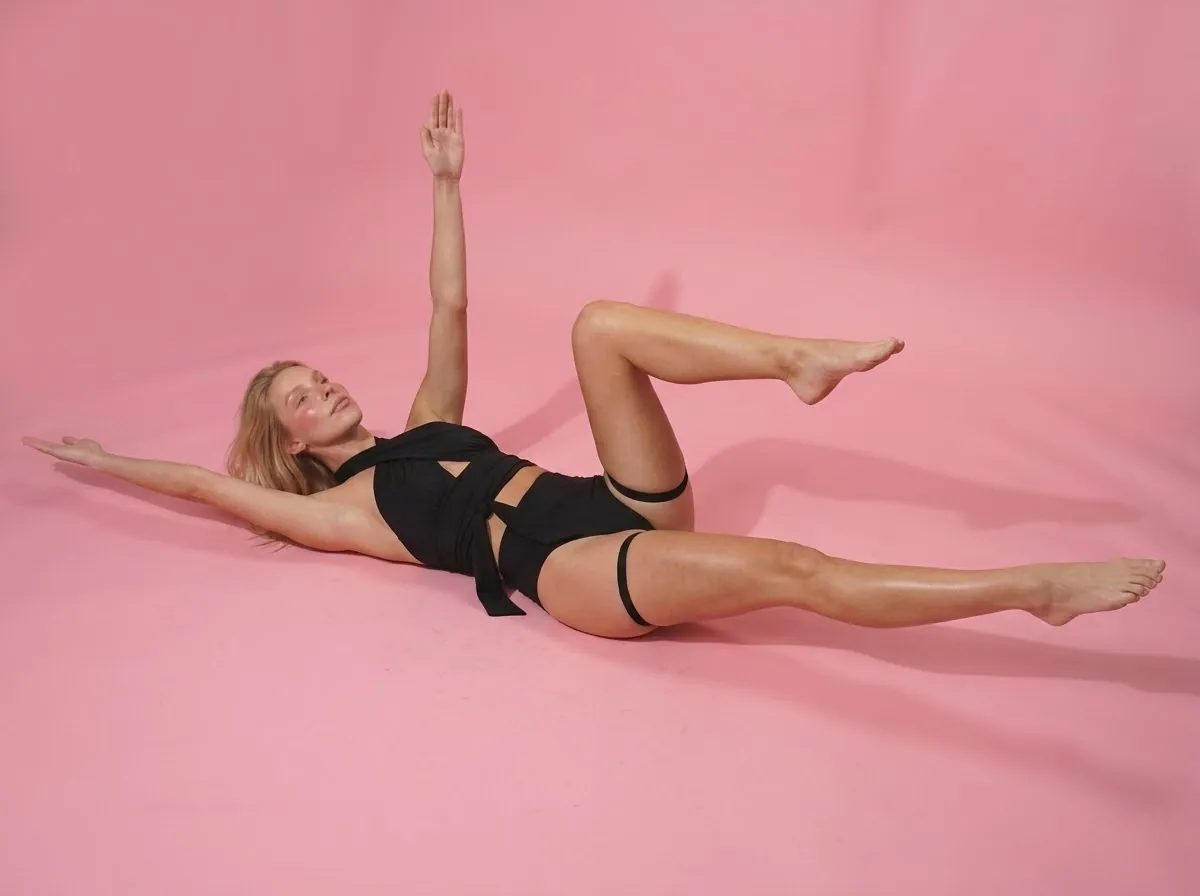
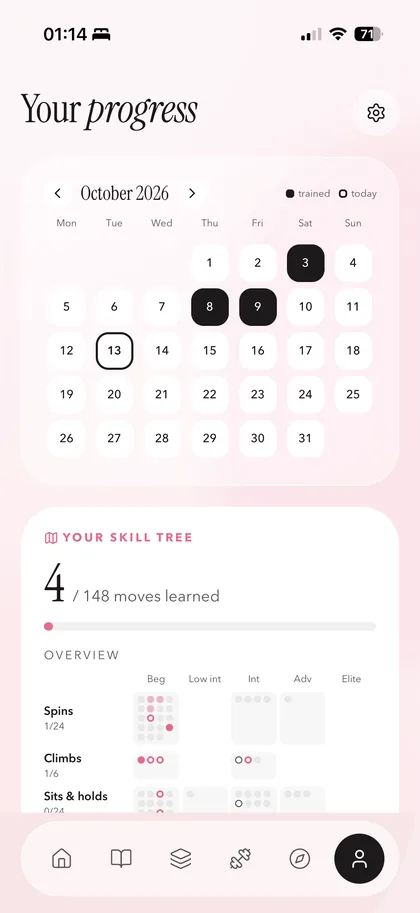
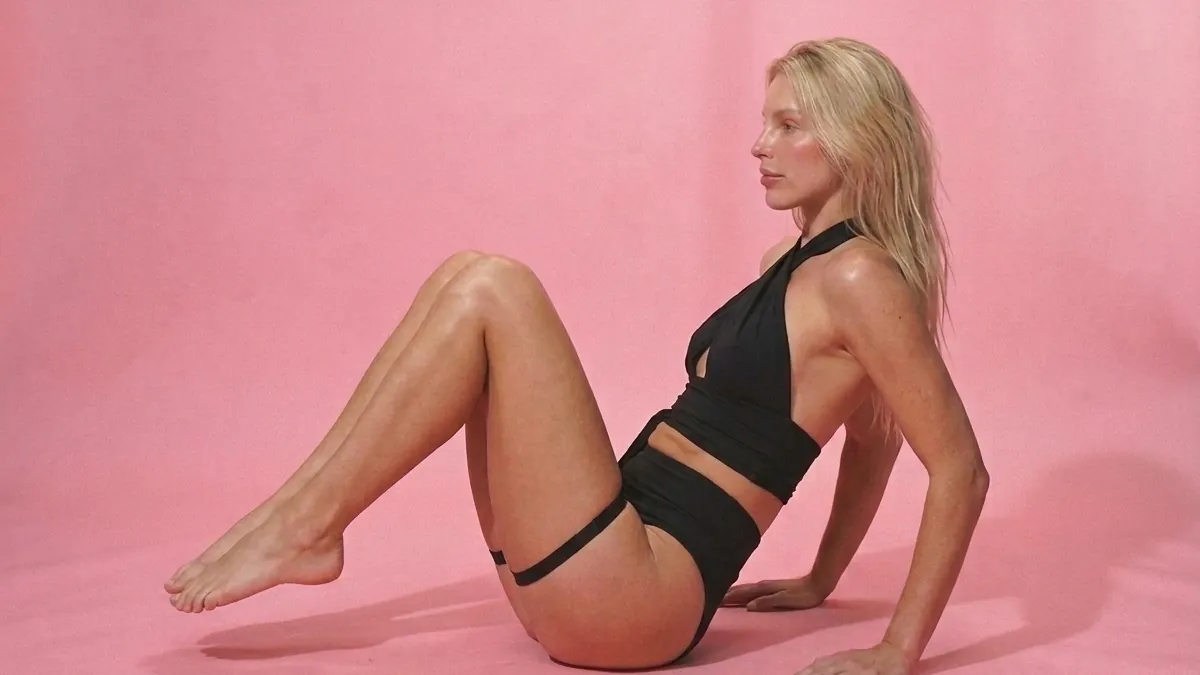
Dead bug, shoulder-blade pulls and floor tucks are present in Coquet's exercise library. That is product evidence, not clinical validation. A hollow-body hold can be a later choice if you can manage it comfortably, but straight legs and a long hold are not prerequisites to earn at any cost.
For a discussion of compression exercises such as hip lifts, hollow holds and seated lifts, see strength coach Neola Wilby's no-kick invert guide. Treat coaching progressions as options, not a diagnosis or a requirement to exercise through symptoms.
How to make preparation part of practice
Begin with a gradual warm-up before demanding pulling or leg lifts. The Pole Physio's warm-up guide describes general movement followed by more specific preparation. Warming up is useful preparation, not a way to make pain safe to ignore.
- Check in before loading. Tell your instructor about current symptoms, recent illness or a break from training. If inverts have been painful, agree what replaces them today.
- Warm up without exhausting yourself. Move gradually into the positions your session needs. A hard core workout immediately before attempts may leave less capacity for skill practice.
- Choose a small amount of useful prep. For a comfortable day, select a couple of the options above. You do not need to complete every drill.
- Let the instructor choose the progression. Agree the entry, support, mat and exit before leaving the floor. A mat and spotter reduce some risks; neither makes an unsuitable attempt safe.
- Record the response. Note what you did and how it felt during practice, later that day and the next morning. Symptoms that recur or worsen deserve review rather than a higher score in your log.
Count open-pole sessions, gym pulling and repeated filmed attempts as part of your workload. If one class introduces demanding invert work, adding extra attempts at home is still extra load. Our guide to planning pole training around recovery can help you organise the week, but your return after pain needs an individual plan.
How Coquet helps you prepare before harder figures
Coquet can put preparation next to the move you want to learn. Its Invert Prep program includes lessons, warm-up routines, core-compression work and structured sessions. The move library provides levels and prerequisite information, and the app displays preparation prompts based on recorded move progress.
One concrete example: the early program session named Compression First combines a lesson, grip-and-shoulder warm-up, pole sit and preparation routines. Its check-in asks where shape is lost: shoulders, tuck or hip lift. That gives you a specific question to bring to class instead of another random attempt.
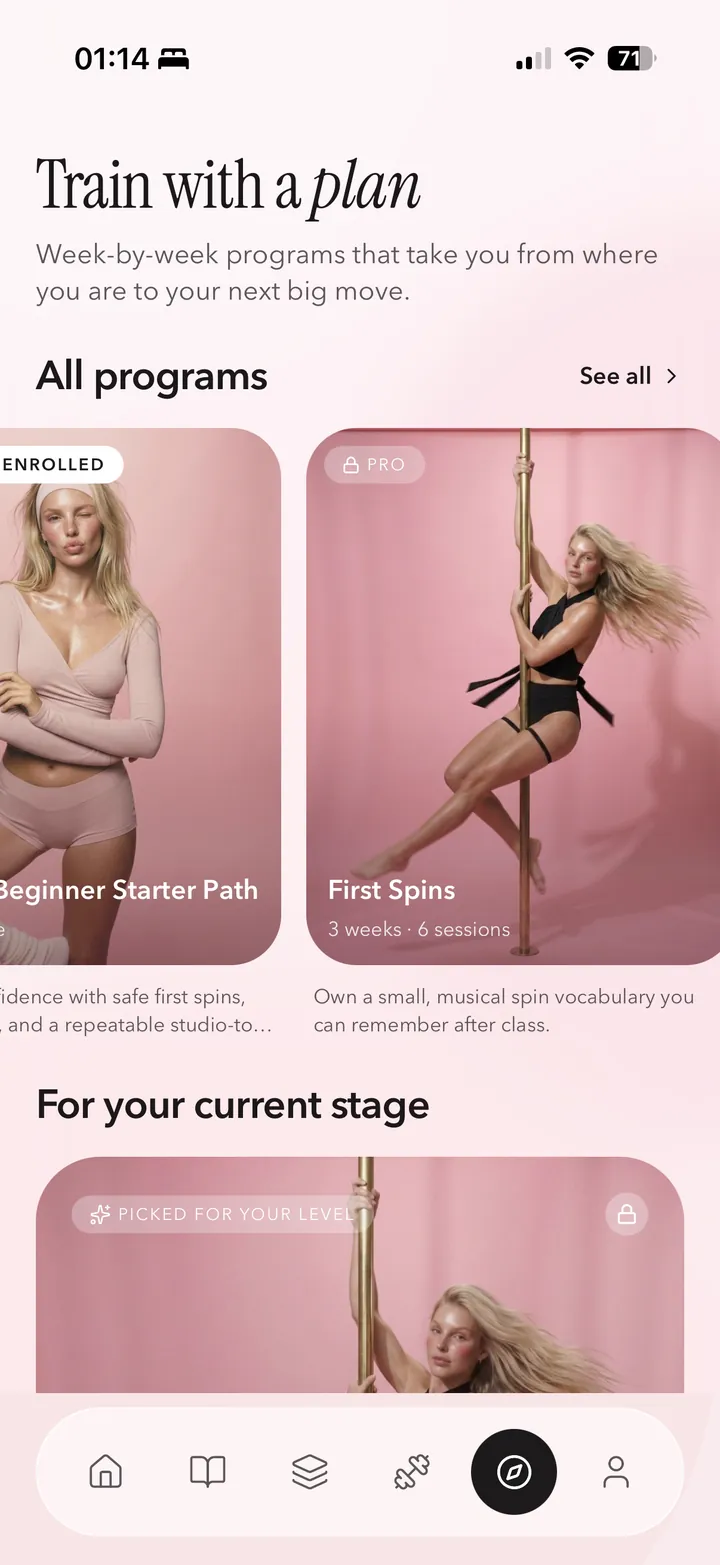
Use the program to organise exercises your instructor has agreed are appropriate, and use session tracking to remember what you practised. Readiness prompts depend on your records; they cannot assess tissue health or watch every attempt. The app does not stop you physically trying a figure. Coquet can guide progressive preparation, but no app can guarantee that you will never be injured.
For move names and levels, use our pole dance moves guide. Keep the decision about a painful return to inverts with a qualified clinician and the teacher supervising your practice.
Questions about back pain and inverts
Does back pain mean my core is weak?
No. Pain has several possible causes and cannot identify a weak muscle by itself. A clinician can assess symptoms; an instructor can observe how you manage the movement.
Should I stretch my back more before trying again?
Stretching is not a universal answer to pain during loading. Stop the painful attempt and ask which movements and exercises suit your situation before adding more range or force.
How many tucks do I need before my first invert?
There is no validated universal count that clears everyone. Your instructor needs to assess the whole movement, including control, an appropriate entry and exit, and how you respond to loading.
Can preparation prevent every pole injury?
No. Preparation can help you build capacity and follow a progression, but it does not remove all risk. Coquet supports that process; it does not diagnose pain, provide rehabilitation clearance or promise injury-free training.
Coquet for iPhone
Available in the App Store
Search for Coquet in the App Store.