How often should you pole dance? A beginner training plan
How many times a week to pole dance as a beginner, why rest days matter, how long it takes to learn, and a simple weekly pole training plan with conditioning.
The short answer
How often should you pole dance as a beginner? Most beginners progress well with two or three pole sessions a week, with at least one rest day between them. Pole loads the hands, wrists and shoulders in ways your body is not used to, and tissues such as tendons adapt more slowly than muscles. Physiotherapist Simone Muscat of The Pole Physio recommends four rest days a week for beginners and no fewer than two for professionals (The Pole Physio).
Rest days do not have to be completely inactive. Off-pole conditioning, mobility and flexibility work all help, as long as they do not exhaust the same grip and shoulder muscles you need for your next pole session.
This article is general information, not medical advice. If you have an injury or a health condition, talk to a doctor or physiotherapist before training.
Why rest days matter in pole
Pole is a strength sport disguised as dance. A single class can include dozens of spins, climbs and holds, each one asking your hands to grip and your shoulders to support a large share of your body weight.
- In a 12-month study of 66 pole dancers, the shoulder was the most frequently injured area, followed by the thigh and hamstring. Moves that load the shoulder in internal rotation were the most common cause of shoulder injuries (Erasmus University Rotterdam).
- A 2022 survey of 276 injured pole dancers in Scientific Reports found that higher training volume was associated with injury (Szopa et al., 2022).
In other words, more pole is not always better. Consistent sessions with recovery in between usually beat four days in a row followed by a week off with sore shoulders.
A simple weekly pole training plan for beginners
Here is an example week for someone taking one or two classes and practising a little at home. Adjust it to your schedule. The principle is to alternate pole days with recovery or off-pole days.
| Day | Focus | Example |
|---|---|---|
| Monday | Pole class or session | Warm-up, spins and the move you are working on, short cool-down |
| Tuesday | Rest or mobility | Walk, gentle stretching, shoulder and wrist mobility |
| Wednesday | Off-pole conditioning | 20–30 minutes: hollow holds, scapular pull-ups or dead hangs, push-ups, glute bridges |
| Thursday | Pole class or session | Climbs, sits and invert preparation |
| Friday | Rest | Complete rest |
| Saturday | Optional short pole practice | 30–45 minutes reviewing combos, or flexibility instead if you feel tired |
| Sunday | Rest | Complete rest |
If you are brand new, start with the two main sessions only and add the optional practice after a month or so, once your hands and shoulders stop feeling sore the next day.
What a good pole session includes
- Warm-up (10 minutes): raise your heart rate, then mobilise the wrists, shoulders, spine and hips. Warm the pole with your hands too: a cold pole is more slippery.
- Technique (20–30 minutes): the moves you are learning, with full attention and rests between attempts. Quality beats the number of attempts.
- Combos or flow (10 minutes): link moves you already know so they become smooth and repeatable.
- Conditioning (10 minutes): one or two exercises that build strength for your next goal, for example tuck holds for your first invert.
- Cool-down: gentle stretching and a quick note of what worked and what you will try next time.
Pole conditioning for beginners
Conditioning is how you get stronger between sessions without wearing out your grip. Useful beginner exercises, most of them possible without a pole:
- Hollow body holds: core strength for tucks, inverts and leg hangs.
- Dead hangs and scapular pulls from a bar: grip endurance and active shoulders.
- Push-ups (on the knees to start): pushing strength and shoulder stability.
- Glute bridges and lunges: leg strength for climbs and controlled landings.
- Shoulder external rotation with a band: balance for all the pulling and gripping pole involves.
- Hamstring and hip-flexor stretching: flexibility for shapes and later splits.
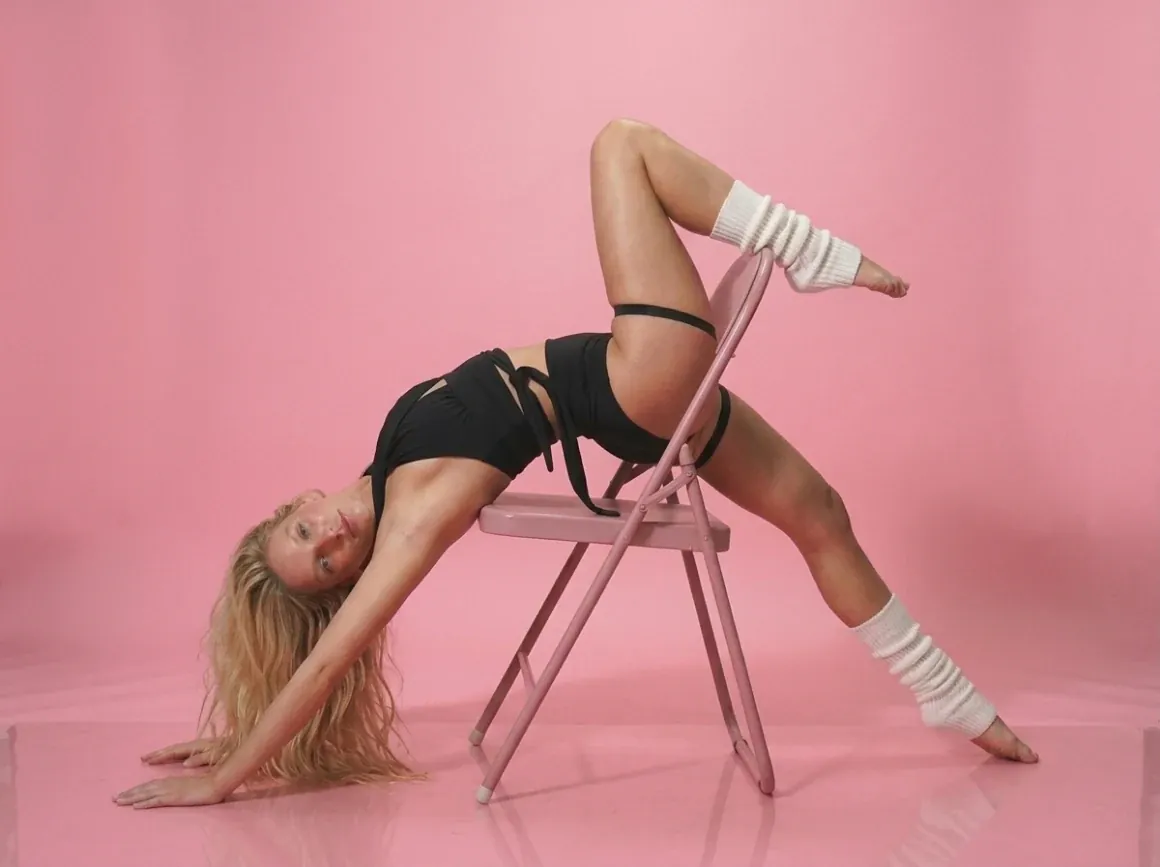
Two short conditioning blocks a week make a visible difference within a couple of months. If you are working towards a specific move, condition for that move: you can find move-specific drills in our pole dance moves list and in Coquet's training programs.
How long does it take to learn pole dancing?
It depends on your starting strength, flexibility and how often you train, so be wary of anyone who gives an exact date. As a rough guide from what instructors commonly report:
- First spins: often in the first few classes.
- Climbs and sits: usually within the first few months.
- First invert: commonly somewhere between a few months and a year of regular training. Dancers with a strength background may get there faster.
- Intermediate moves such as the Shoulder Mount or Ayesha: often a year or more.
Comparing yourself with someone else's timeline on social media is rarely helpful. Comparing yourself with your own videos from three months ago is.
Bruises, grip and other beginner questions
- Bruises: very common in the first months, especially on the inner knees, thighs and shins, because skin and muscle are not used to the pressure. They usually reduce as your technique and tolerance improve. Bruising that is unusual, severe or comes with pain in a joint is worth checking with a professional.
- Grip: skin contact gives grip, so most pole moves need bare legs. Avoid body lotion on training days, keep the pole clean and dry, and use a grip aid if your hands sweat.
- Pain: muscle soreness the next day is normal. Sharp pain, joint pain or pain that lasts is a reason to stop and get it checked.
Read the Coquet safety policy for more on training safely, especially at home.
Track your training to see progress
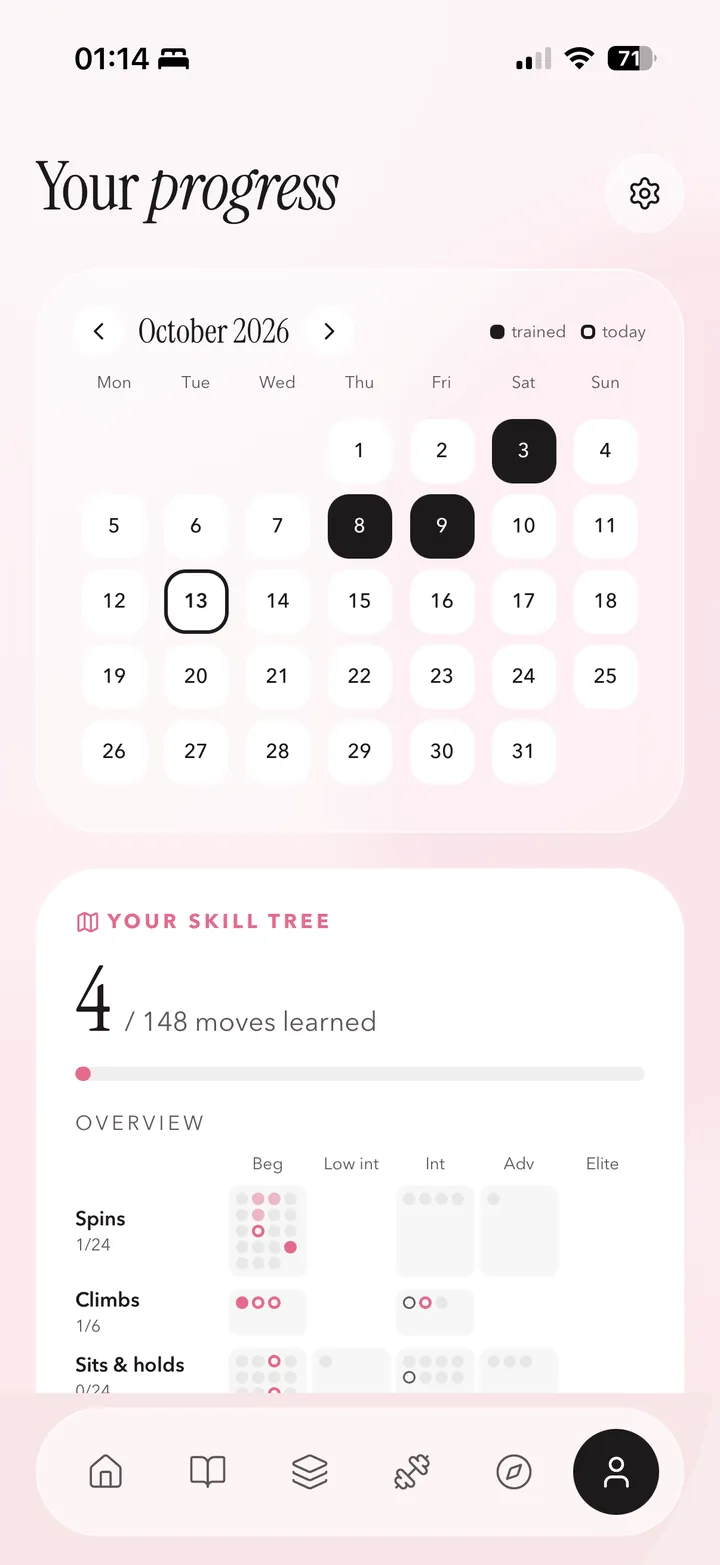
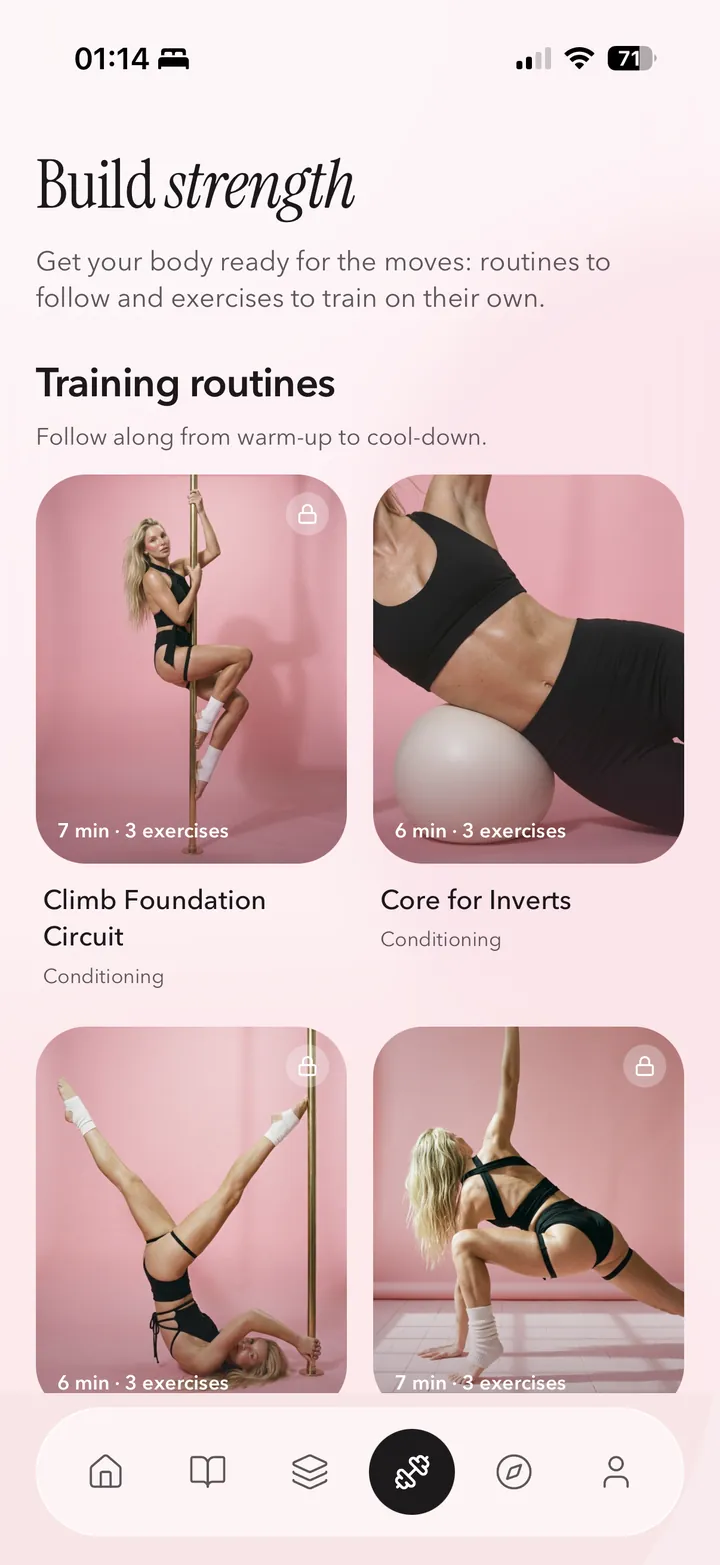
Progress in pole is slow enough that it is easy to feel stuck. Logging each session (date, moves, how it felt) and filming key attempts lets you see the trend. The Coquet progress tracker keeps your sessions, streak and weekly goal in one place, and its programs build a week-by-week plan for a goal such as your first invert. For a comparison of apps that can help, read our guide to the best pole dance apps for iPhone.
Frequently asked questions
How many times a week should a beginner pole dance?
Two or three times a week is a good range for most beginners, with at least one rest day between sessions. The Pole Physio recommends four rest days a week for beginners.
Is it OK to pole dance every day?
For beginners it is not recommended. The hands, wrists and shoulders need time to adapt, and higher training volume has been associated with injury in pole dancers. Use off-pole days for rest, mobility or light conditioning instead.
How long does it take to learn to invert on a pole?
Commonly between a few months and a year of regular training, depending on your starting strength. Building core and shoulder strength with conditioning usually shortens the wait.
What exercises help with pole dancing?
Hollow body holds, dead hangs, scapular pulls, push-ups, glute bridges, banded shoulder rotation and hamstring and hip stretches all build strength and flexibility for pole.
Is it normal to get bruises from pole dancing?
Yes, bruises on the knees, thighs and shins are common for beginners and usually reduce over time. Seek advice for unusual or severe bruising, or for joint pain.
Should I warm up before pole?
Yes. A ten-minute warm-up that raises your heart rate and mobilises the wrists, shoulders, spine and hips prepares you for gripping and lifting, and warming the pole improves grip.
Coquet for iPhone · private beta
Know exactly what to train next
- 148 pole moves with levels, technique cues and common mistakes
- Week-by-week programs for goals like your first invert
- Slow motion, frame step and a move map of what you are ready for
Founding members get in first and keep the launch rate.