Pole dance moves list: names from beginner to advanced
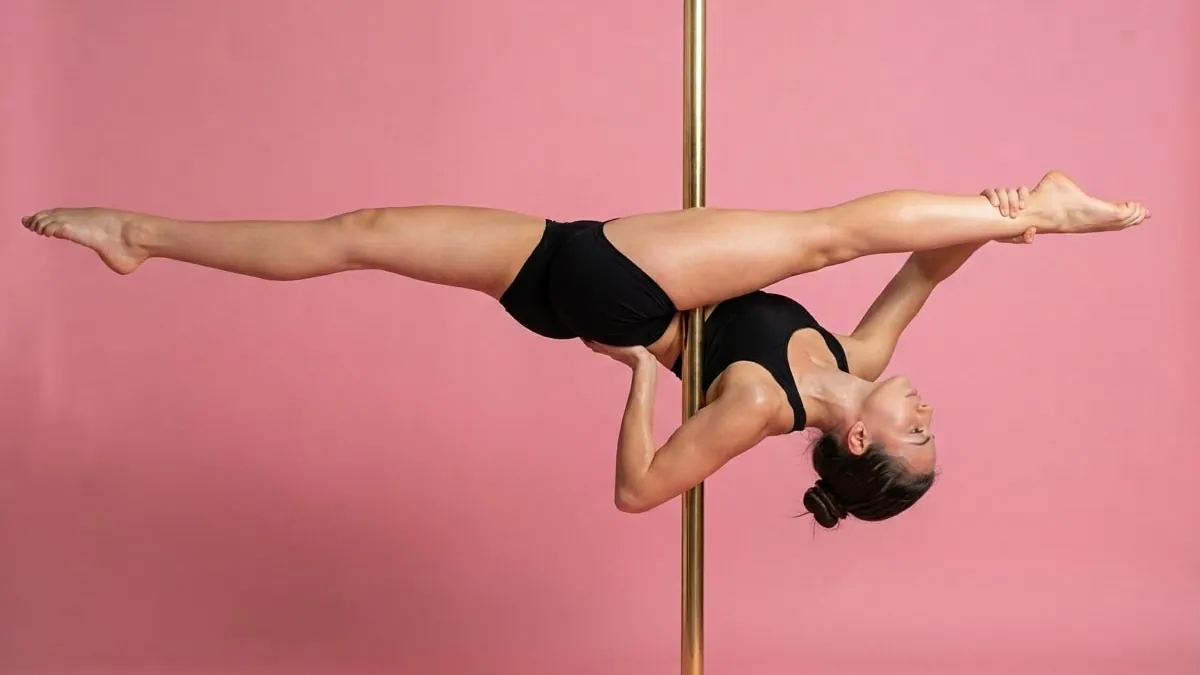
A pole dance moves list with names and photos by level: beginner spins and sits, first climbs and inverts, then intermediate and advanced tricks.
The short answer
Most pole dancers learn in the same broad order: walks and basic spins (Fireman Spin, Front Hook Spin, Back Hook Spin, Chair Spin), then sits and the first climb (Basic Climb, Pole Sit, Crucifix), then the first invert (an Inside Leg Hang or Outside Leg Hang from a controlled invert), and only after that intermediate and advanced tricks such as the Shoulder Mount, Ayesha, Jade Split and Handspring. Each stage builds the grip, shoulder strength and body awareness that the next one needs.
The list below groups common pole moves by level. Names are the ones used most often in English-speaking studios. Your studio may call some of them something else, which is normal.
Beginner pole moves
Beginner moves teach you to hold your weight with your hands, move around the pole with control and land softly. They are done on a static pole or a slow spinning pole.
Spins
- Fireman Spin: both hands on the pole, both knees lift together and the body spins down. Usually the very first spin.
- Front Hook Spin: the inside leg hooks the pole in front of you while you swing around it.
- Back Hook Spin: the same idea with the hook behind the pole, which changes the shape and the direction of the swing.
- Chair Spin: knees tucked as if sitting in a chair. It builds the core control later needed for sits.
- Carousel Spin (also called Attitude Spin or Pirouette): a spin with the legs held in a shaped, extended position.
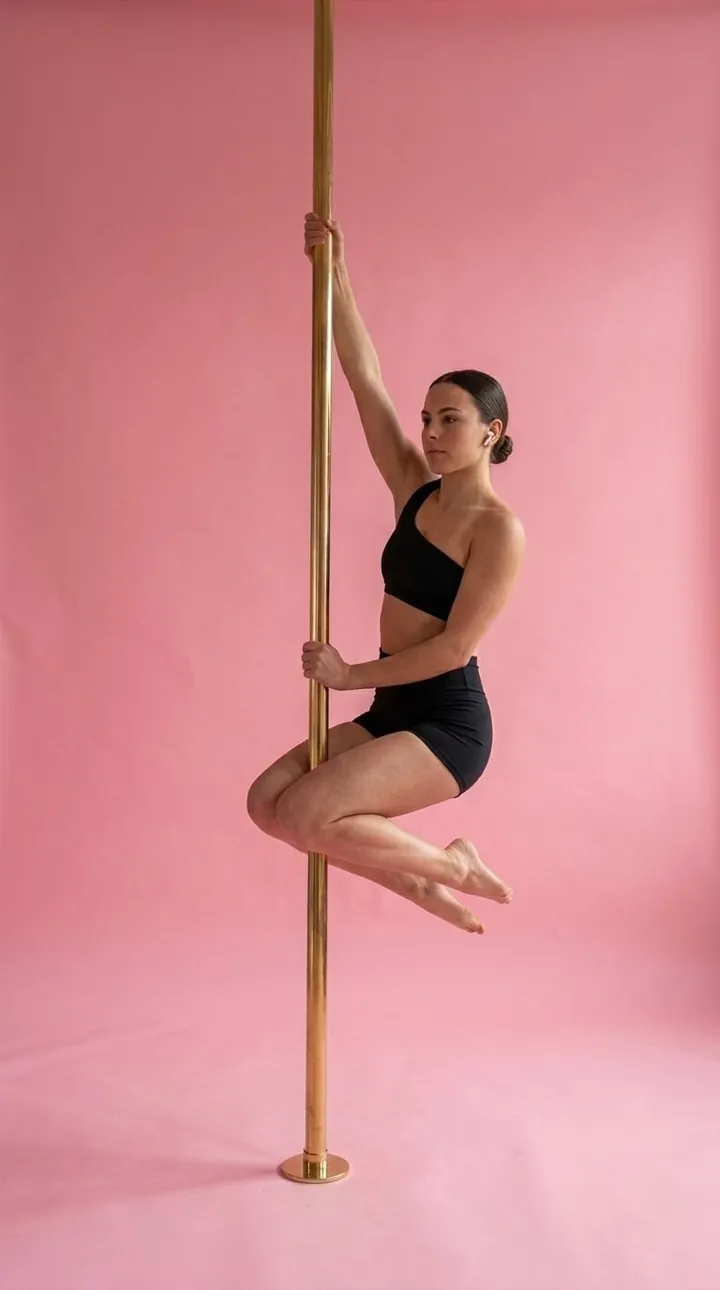 Fireman Spin
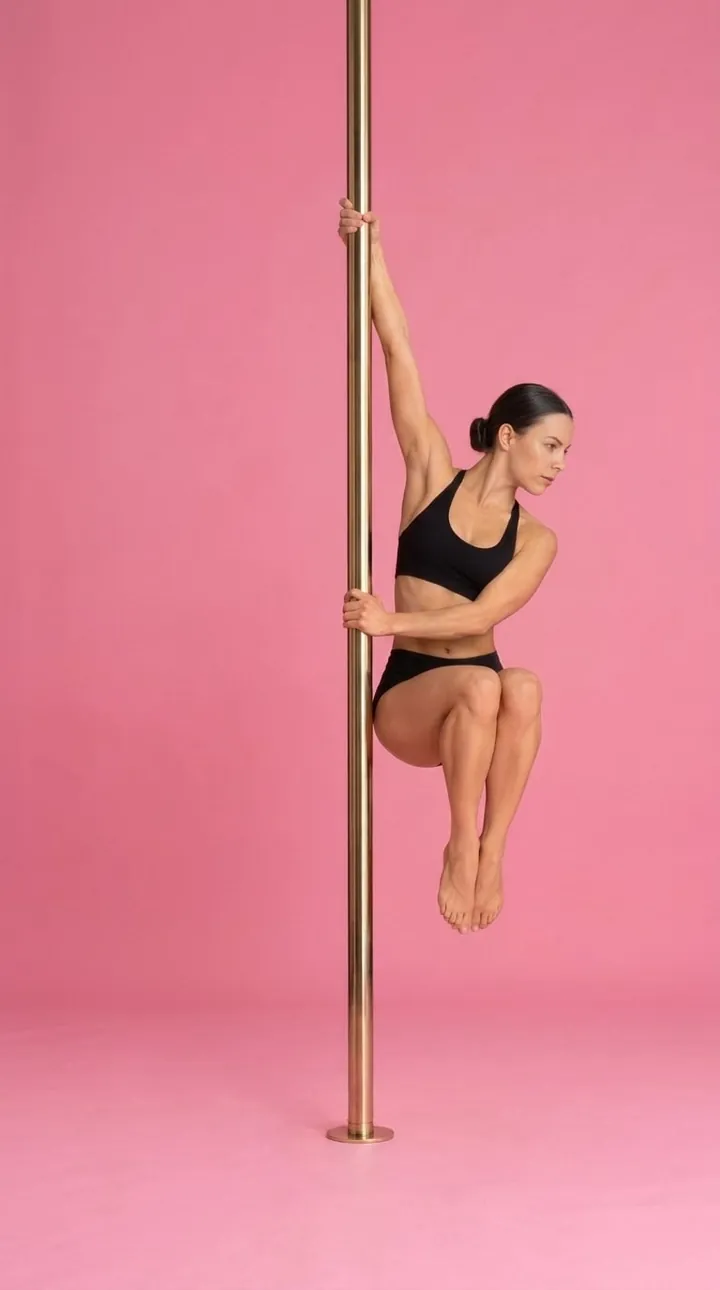 Chair Spin
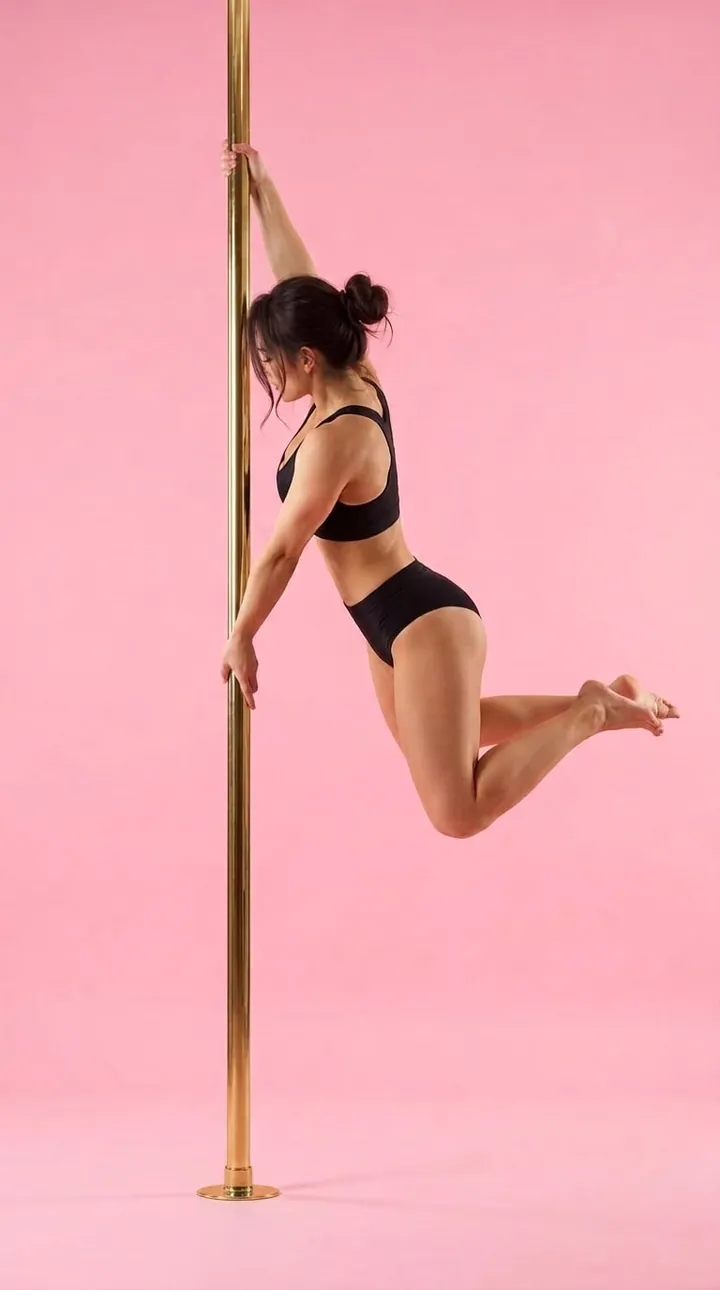 Carousel Spin
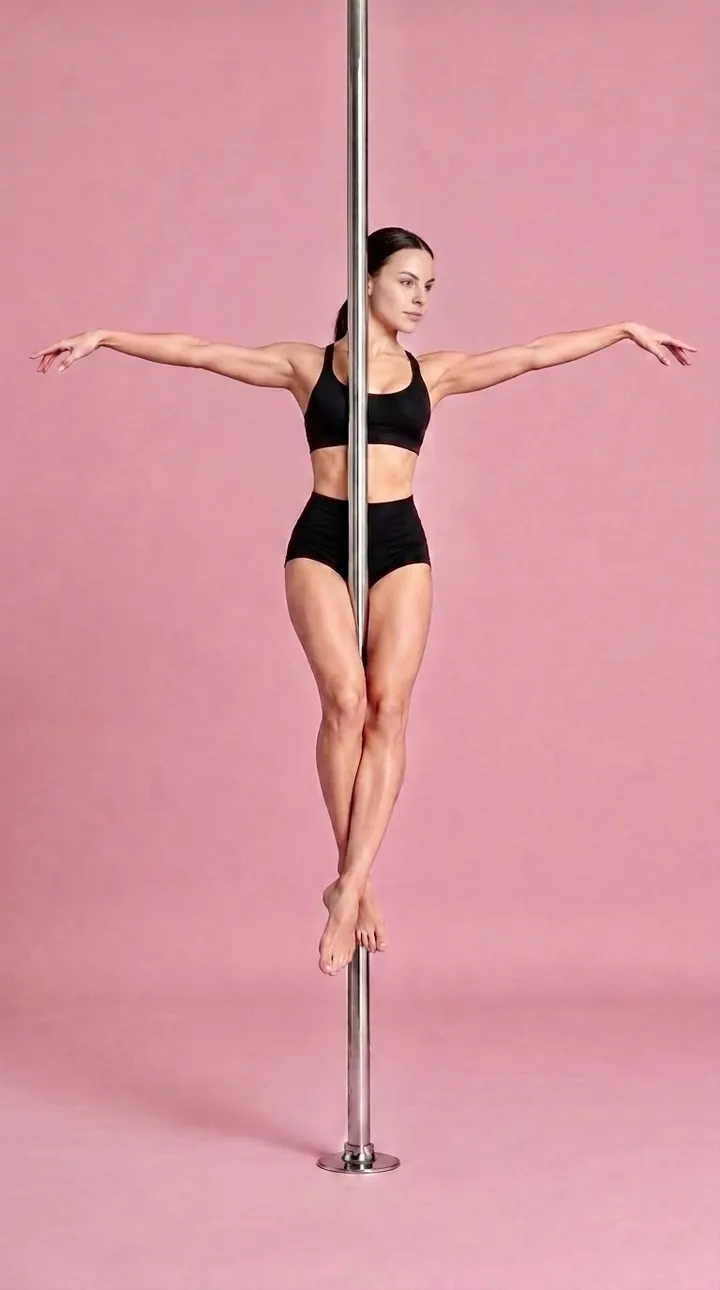 Crucifix
First holds and floor elements
- Pole walks and pivots: not a trick, but the base of every routine and the first thing most classes teach.
- Body wave and body roll against the pole: fluid floor and standing movement that connects tricks.
- Basic Climb: one or two climbs using a shin and instep grip. It is the gateway to everything that happens higher up the pole.
- Pole Sit: sitting on the pole held by the thighs, often first with one hand still on the pole.
- Crucifix: a hands-free hold from the thighs with the body upright, arms open.
Moves that lead to your first invert
Going upside down is a milestone, and it is where good preparation matters most. Teachers usually want to see these before an unassisted invert:
- Tuck holds and knee raises on the pole, keeping the shoulders engaged rather than hanging.
- Controlled Chair Spin and Pole Sit without sliding.
- Invert from the floor (Basic Invert): a tucked or straddled lift into an upside-down position with the hands in a split grip, ideally first with a spotter.
- Inside Leg Hang and Outside Leg Hang: the first upside-down holds, gripped by one leg.
- Martini Sit and Allegra: common next steps that combine sits with more leg grip.
A useful rule: if you cannot hold a tight tuck on the pole for a few seconds with your shoulders active, more conditioning will help you invert sooner than more invert attempts. See our beginner training plan for conditioning ideas.
Intermediate pole moves
- Shoulder Mount: the body lifts upside down from a shoulder-on-pole position. It is a foundation for many advanced moves and needs strong, stable shoulders.
- Butterfly: an upside-down hold with one leg hooked and the other extended.
- Gemini and Scorpio: leg-hang variations from the outside and inside leg hang.
- Superman: a horizontal hold with the pole between the thighs and one hand gripping.
- Brass Monkey: a hang from the elbow and the back of the knee, legs open.
- Cupid: an elegant upside-down shape held by the legs, with the hands free.
- Ayesha: a strong inverted hold with straight arms and the body away from the pole. Many dancers work on it for months.
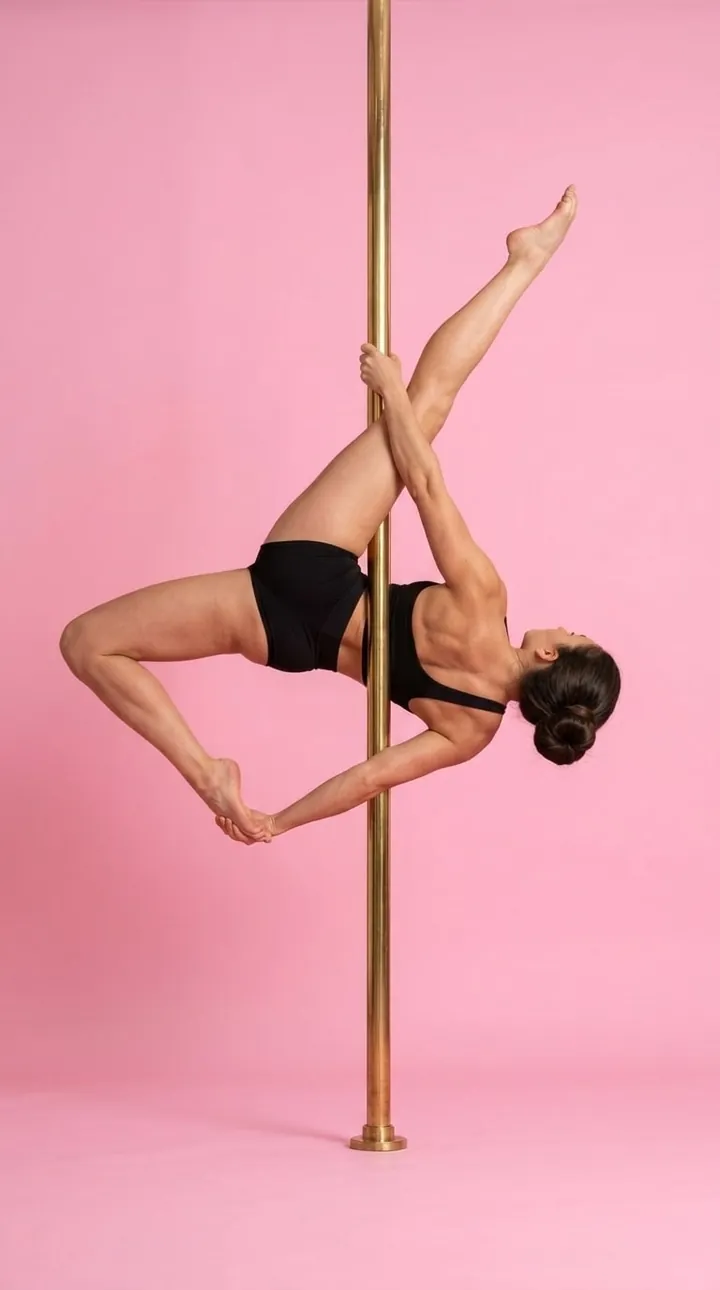 Allegra
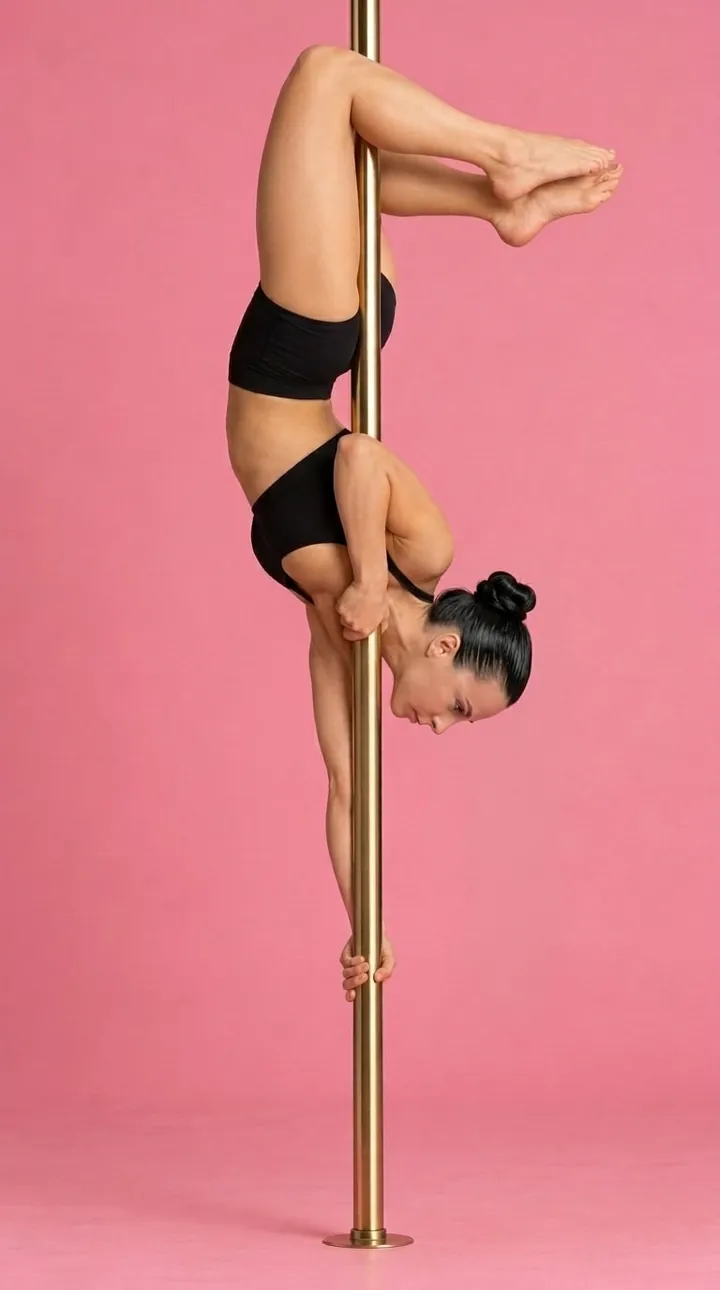 Brass Monkey
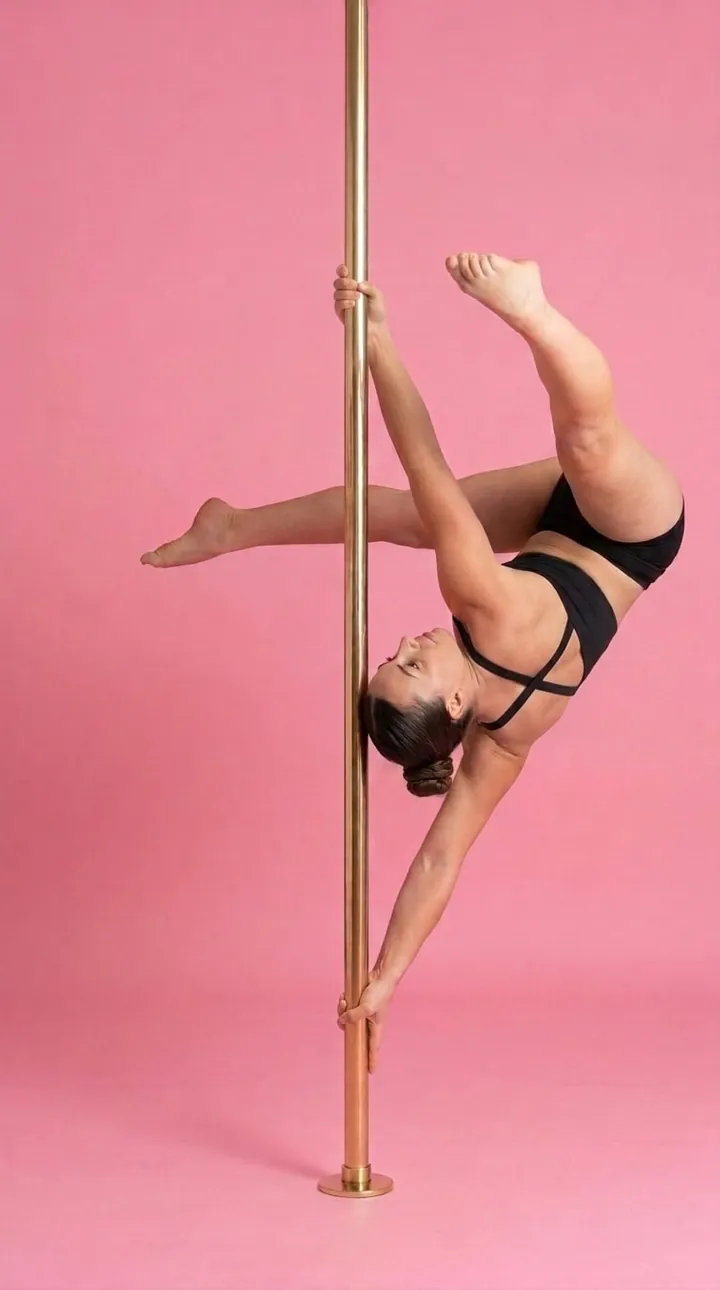 Ayesha
Advanced pole moves
- Jade Split: a split held upside down, usually entered from the Outside Leg Hang. It needs flexibility as much as strength.
- Handspring: a straight-arm lift from the floor into an inverted position. Elbow and shoulder alignment matter a lot here.
- Iron X and Flag: horizontal holds that need full-body strength.
- Phoenix Spin: a dynamic spin that flips the body through the air on a spinning pole.
- Iguana and Janeiro: mounts and drops that are best learned with a coach and a crash mat.
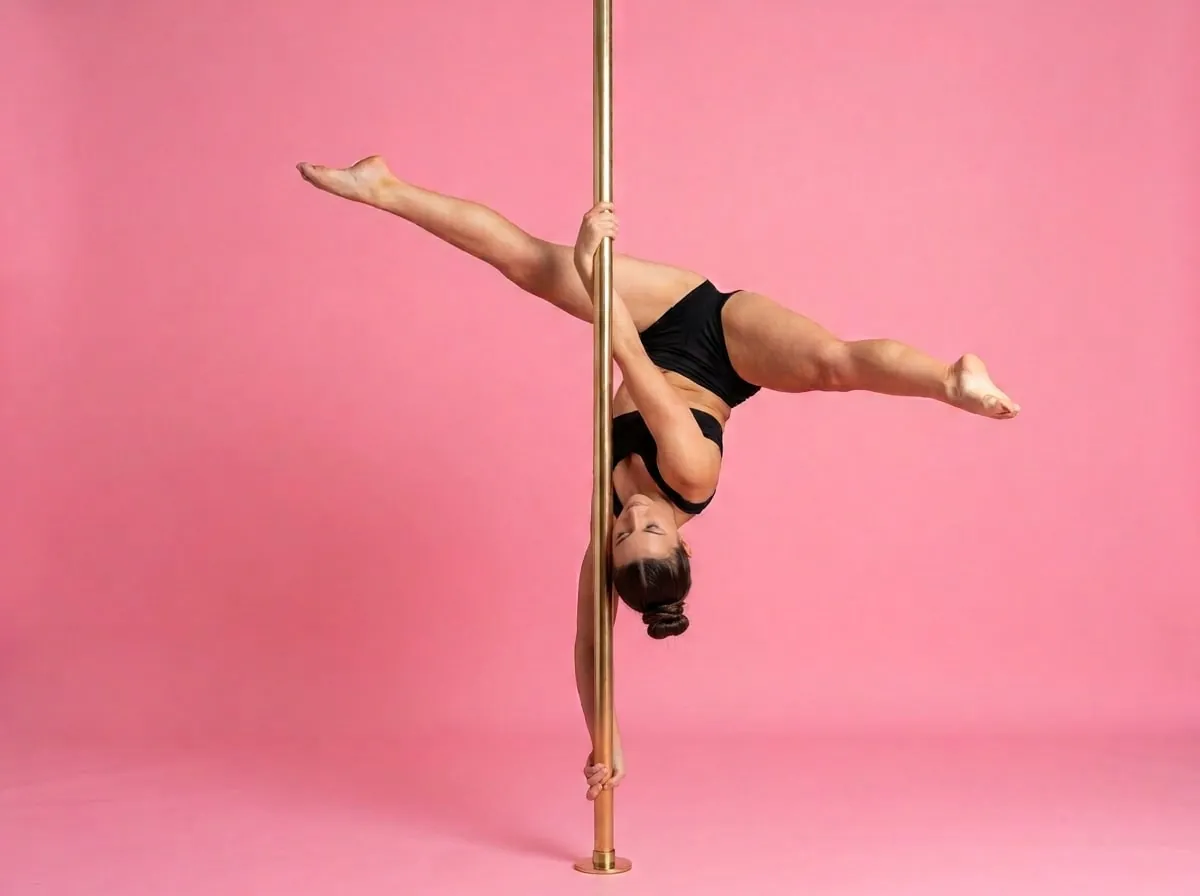 Handspring
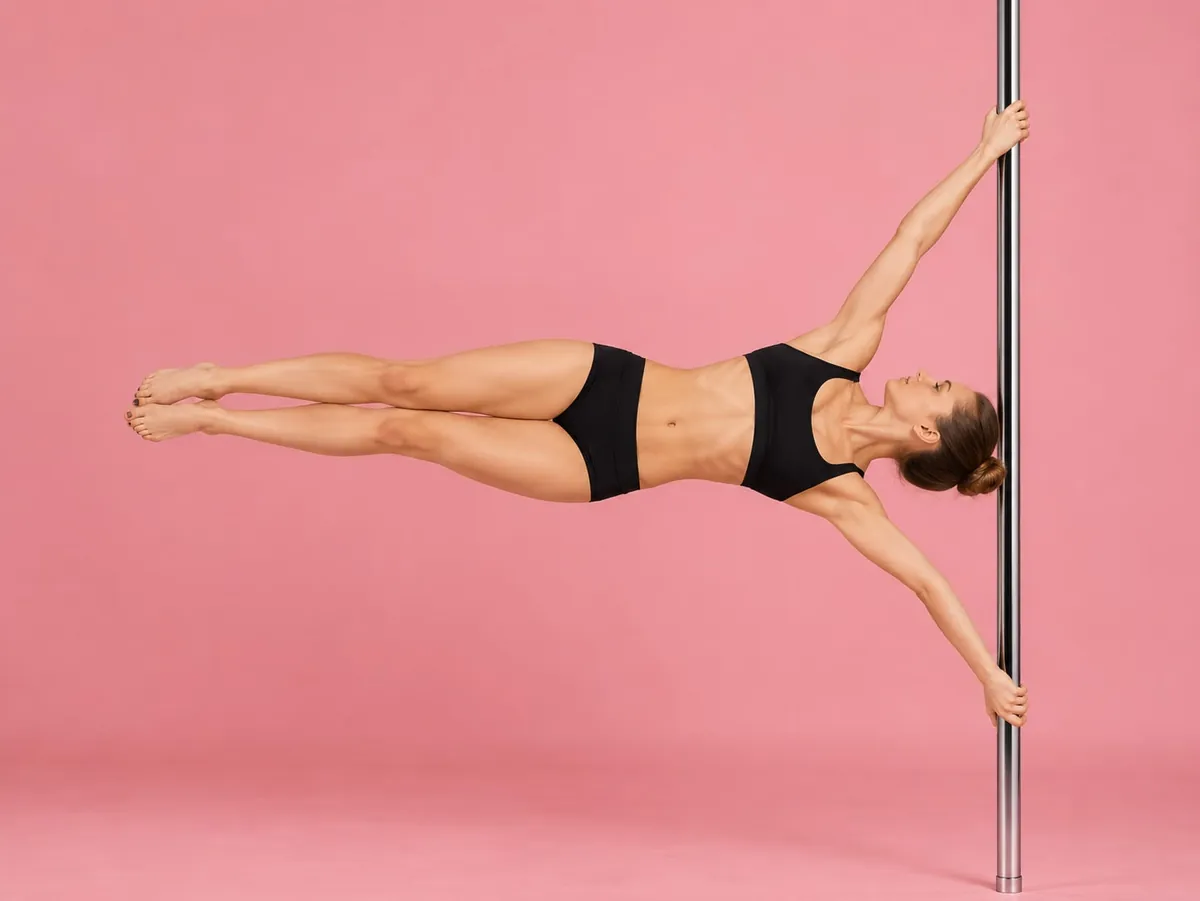 Flag
Advanced moves are not just "harder versions" of beginner ones. Each has prerequisites, and the safest route is to learn them in a chain: for example, Outside Leg Hang before Jade Split, Shoulder Mount and Ayesha before Handspring.
What order should you learn pole moves in?
- Foundation: walks, Fireman Spin, Front Hook Spin, Back Hook Spin, Chair Spin.
- Climbing and sitting: Basic Climb, Pole Sit, Crucifix.
- Invert preparation: tucks, knee raises and controlled sits.
- First inverts: Basic Invert, Inside and Outside Leg Hang, Martini Sit.
- Intermediate: Shoulder Mount, Butterfly, Gemini, Superman, Ayesha.
- Advanced: Jade Split, Handspring, Iron X, aerial inverts.
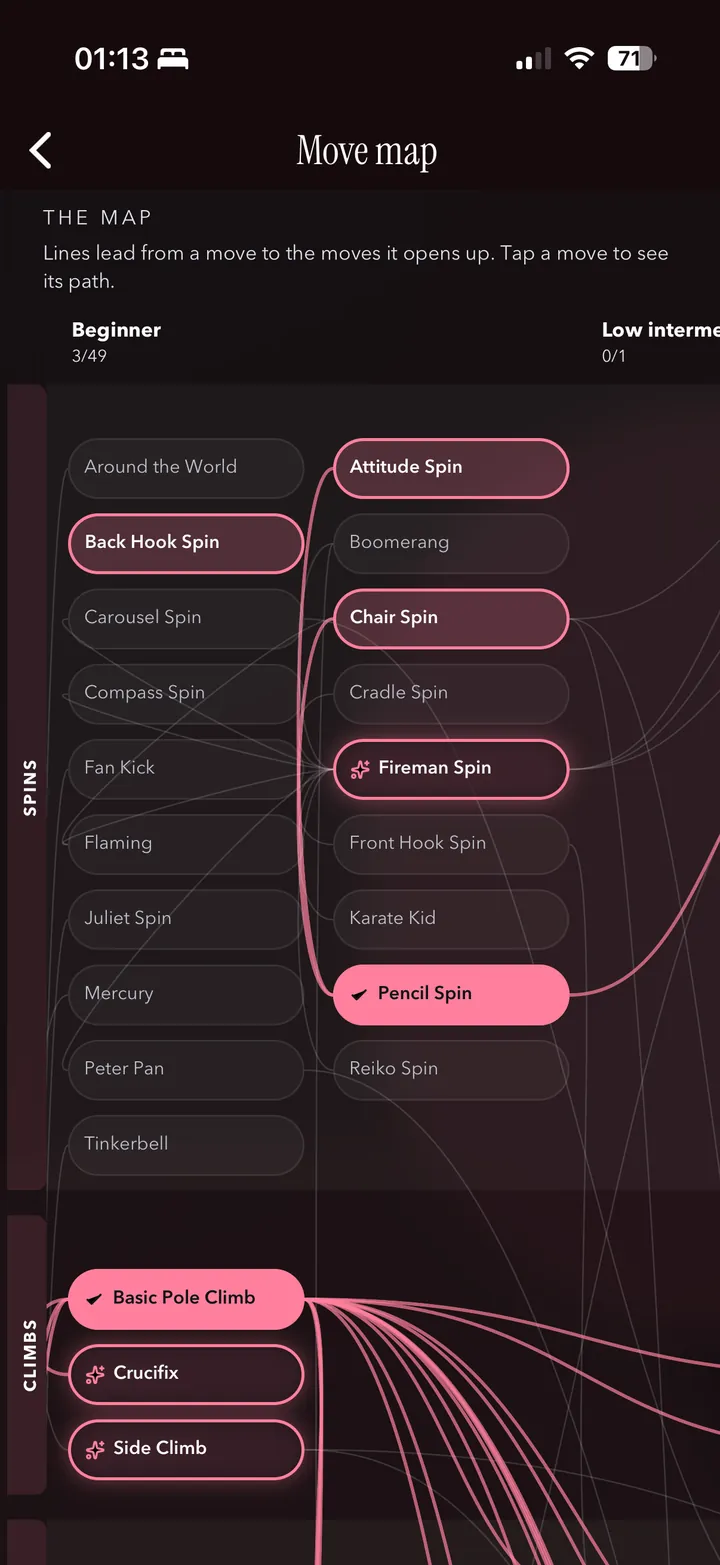
Your teacher may reorder this to suit your body. Flexible dancers often get split shapes early, while stronger dancers may find mounts easier first. A good progression chart shows which move unlocks which, not just a fixed level number.
Why pole move names differ between studios
Pole has no single governing dictionary for move names. Many names were invented by the dancers who popularised them or spread through particular studios and online tutorials. The same move can therefore have two or three names (a Carousel Spin is also called an Attitude Spin), and the same name can mean slightly different shapes in different places. When you search for a move online, try its alternative names too, and add the name your studio uses to your own notes.
How to keep track of the moves you know
Once you know more than a dozen moves it gets hard to remember what you have learned, what you are working on and what comes next. A simple system works well:
- Mark each move as want to learn, learning or achieved.
- Note which side you can do it on. Most dancers have a strong side.
- Film your attempts and compare them over time. Video shows flexed feet and bent knees that you cannot feel in the air.
- Write down the prerequisite moves and conditioning for the move you are working on next.
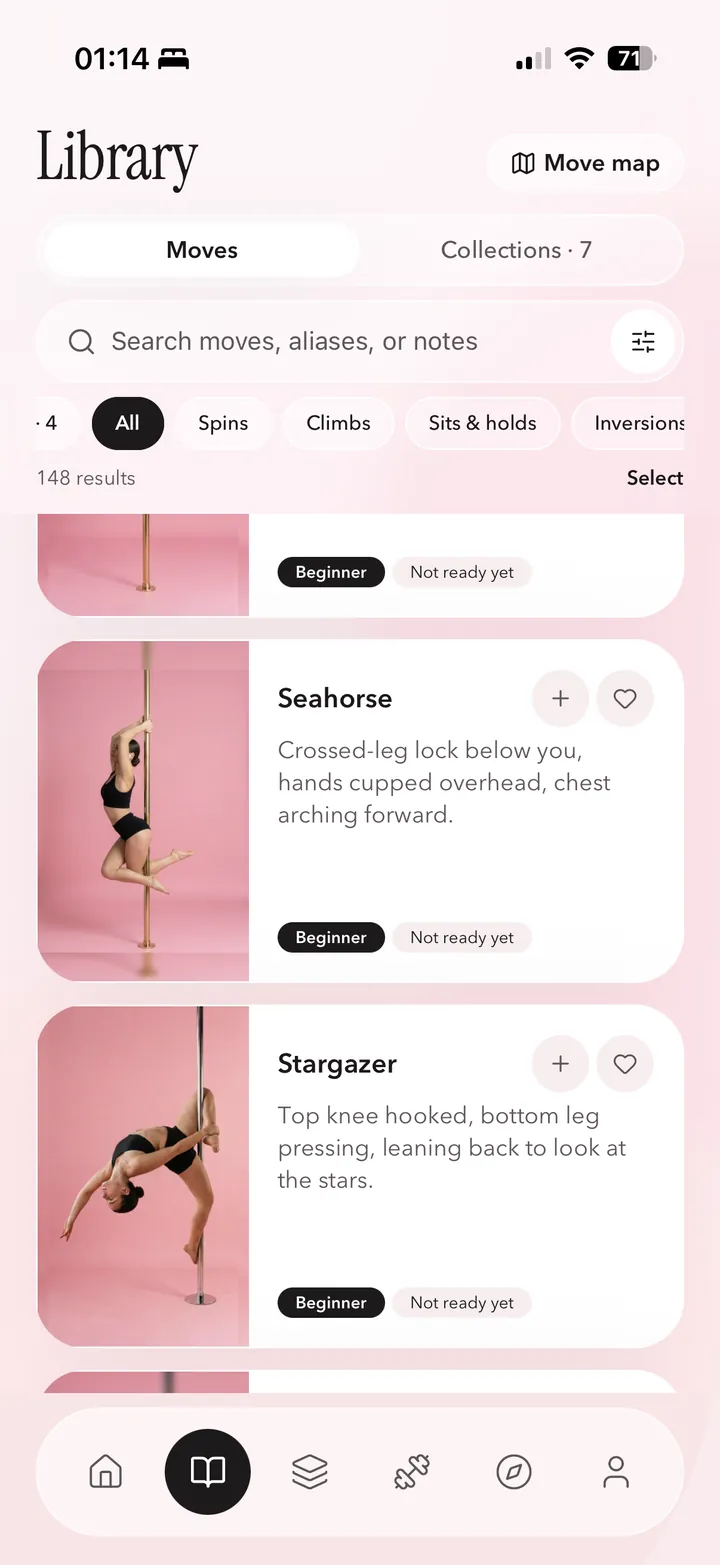
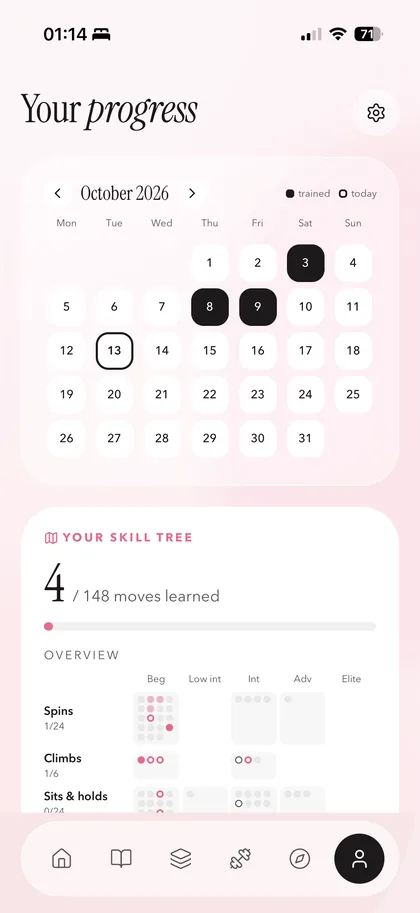
The Coquet move library does this for 148 pole moves: each move has a level, technique cues, common mistakes and a status you can update. Its move map shows which moves you are ready for next. If you'd rather compare trackers first, see our guide to the best pole dance apps.
Frequently asked questions
What are the basic pole dance moves for beginners?
The Fireman Spin, Front Hook Spin, Back Hook Spin and Chair Spin are the usual first spins. Most beginners also learn pole walks, a Basic Climb, the Pole Sit and the Crucifix before trying to go upside down.
What is the difference between a spin, a climb and an invert?
A spin moves your body around the pole, usually travelling downwards. A climb takes you up the pole using your hands and a leg grip. An invert turns you upside down, with your hips above your head.
When am I ready to invert on the pole?
Most teachers look for a controlled tuck on the pole with engaged shoulders, a confident Pole Sit and a solid Chair Spin. Learn your first invert with an instructor or spotter and a crash mat, not alone.
How many pole moves are there?
There is no fixed number, because new tricks and variations appear all the time. Libraries and syllabuses typically list from about one hundred to several hundred named moves and variations. Coquet includes 148 pole moves from beginner to elite.
Why do different studios use different names for the same pole move?
Pole has no single official naming system. Names spread through studios, competitions and online tutorials, so one move can have several names. Search for the alternative names and note your studio's version.
Coquet for iPhone · private beta
Know exactly what to train next
- 148 pole moves with levels, technique cues and common mistakes
- Week-by-week programs for goals like your first invert
- Slow motion, frame step and a move map of what you are ready for
Founding members get in first and keep the launch rate.