How to start pole dancing: classes, costs and kit

How to start pole dancing: which class style to pick, what to ask a studio, what you pay for, the kit you need on day one and when a home pole makes sense.
The short answer
How to start pole dancing: book a beginner course or taster class at a pole studio, wear shorts and a fitted top, train once or twice a week, and leave the home pole until you know the basics. A beginner course is usually the cheapest way per class to learn properly, because the moves are taught in order and the instructor can spot you.
Below are the five decisions you actually have to make, in the order you will make them.
Step 1: Pick a class style
Studios use different names, but most beginner timetables offer some version of these. You do not have to choose forever: many dancers mix styles after the first few months.
| Style | What happens in class | Pick it if… |
|---|---|---|
| Pole fitness or pole sport | Spins, climbs, sits and later inverts, with conditioning; usually barefoot | You want strength and tricks, and like seeing measurable progress |
| Exotic or heels | Walks, floorwork, flow and spins, often in pole heels once you are ready | You want to dance to music and enjoy a sensual, theatrical style |
| Pole choreography or flow | A short routine built over several weeks from moves you already know | You learn best by remembering a sequence |
| Taster or intro class | A single class covering grip, a walk and a first spin | You are not sure yet and want to try before buying a course |
If you are torn, a pole fitness beginner course is the safest default. The grip, spins and climb you learn there carry over to every other style, and our step-by-step guide to how to pole dance shows that order.
Step 2: Choose a studio
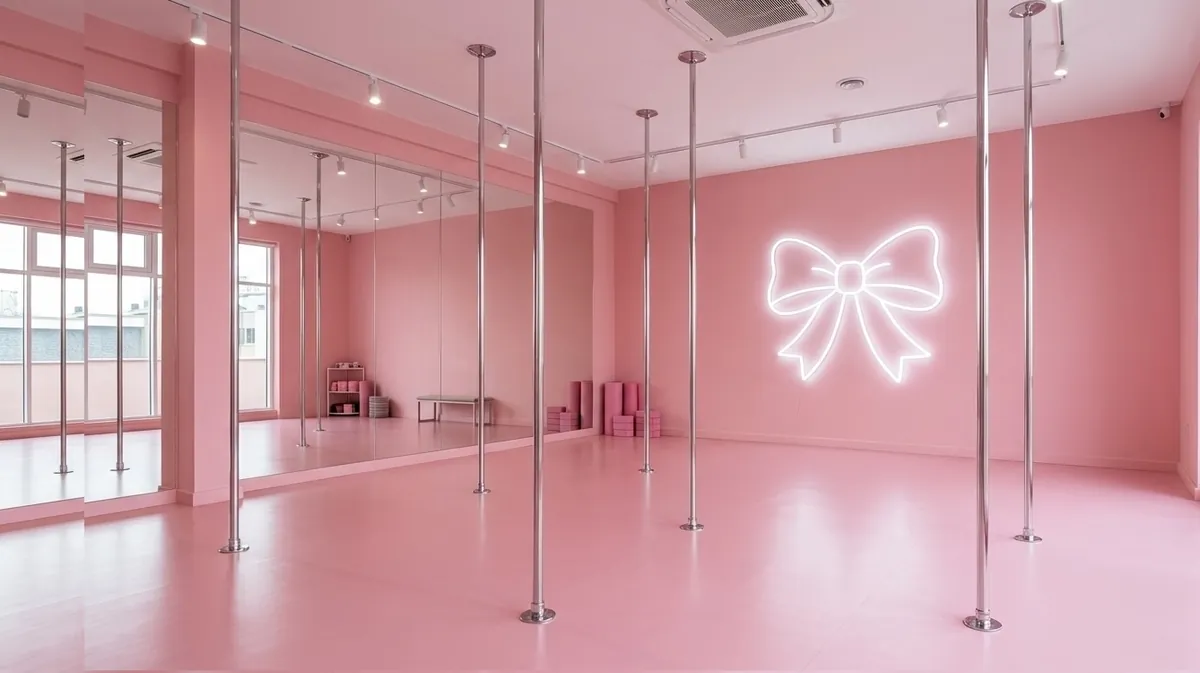
Physiotherapist Simone Muscat of The Pole Physio suggests looking for skilled instructors, a welcoming atmosphere and a clear commitment to safety, and reading reviews or taking a tour before you commit (The Pole Physio). In practice, these questions tell you most of what you need:
- Is there a beginner course, or only drop-in classes? A course that builds week on week is easier to learn from than mixed-level drop-ins.
- How many students share a pole? Sharing is normal, but you want enough turns to practise each move on both sides.
- Are the poles static, spinning or both? Beginners usually start on static poles; spinning mode comes later.
- What training do the instructors have, and do they spot students on climbs and inverts?
- Is a warm-up built into each class, and do they ask about injuries before you start?
- How do they clean the poles between classes?
If you only ask one thing, ask: "What will we cover in the first three weeks?" A real beginner course has an answer ready, something like "grip and the pole walk, then the Fireman Spin, then the Chair Spin", because everyone in the group starts at the same point and the moves follow in order (our list of pole dance moves shows that usual order). If the answer is "it depends who turns up", you are looking at mixed-level drop-in classes sold as a course.
Nervous about the first class? Ask what happens if you can't do a move yet. A good studio talks about an easier version or a conditioning drill you can do instead, so you never stand at the side of the room watching.
Step 3: Understand what you pay for
Prices vary a lot between cities and studios, so we do not quote figures here. What is useful is knowing the usual ways studios charge, so you can compare the cost per class rather than the headline price:
- Taster or trial class: a single class, often priced lower to let you try.
- Beginner course: a block of weekly classes paid up front, usually the best value per class and the best structure.
- Drop-in class: pay as you go, flexible but usually the highest price per class.
- Class pass or membership: a set number of classes, or unlimited classes, per month.
- Open practice: time on a pole without teaching, once you know enough to practise safely.
Before you pay, ask how long passes stay valid, whether you can make up a missed course class, and whether there is a cancellation window. Those details often matter more than a small price difference.
Step 4: Get the kit (there isn't much)
For your first classes you need shorts that leave your legs bare, a fitted top or sports bra, a water bottle and a small towel. Skip body lotion on class days, because it makes skin and the pole slippery. Take off rings and bracelets. Our guide to what to wear to pole class covers outfits by class type.
Wait on everything else until your instructor suggests it. Grip aids, knee pads and pole heels all have their place, but which one you need depends on your skin, the style you choose and the moves you are learning.

Step 5: Decide whether, and when, to get a home pole
A home pole lets you practise between classes, but it is not where you should learn. Climbs and inverts need a spotter and an instructor's eye, and a pole is only as safe as its installation. If you buy one later, follow the manufacturer's installation instructions exactly, check your ceiling and floor are suitable, and test it before every session. The Pole Physio makes the same point: if you train at home, make sure the pole is installed securely.
A sensible rule is to wait until you have a few months of classes behind you and can climb and come down with control.
If you are still unsure: a quick decision guide
- You are nervous about being watched: book a taster class at a quieter time, or ask if the studio runs small beginner groups.
- You want to get strong: pole fitness beginner course plus one short conditioning session a week.
- You want to dance more than do tricks: exotic or choreography classes, still with a beginner course for the basics.
- There is no studio near you: look for a weekend workshop or intensive, and hold off on inverts until you have in-person coaching.
- You are coming back after a long break: start at beginner level again; your body needs to re-adapt even if you remember the moves.
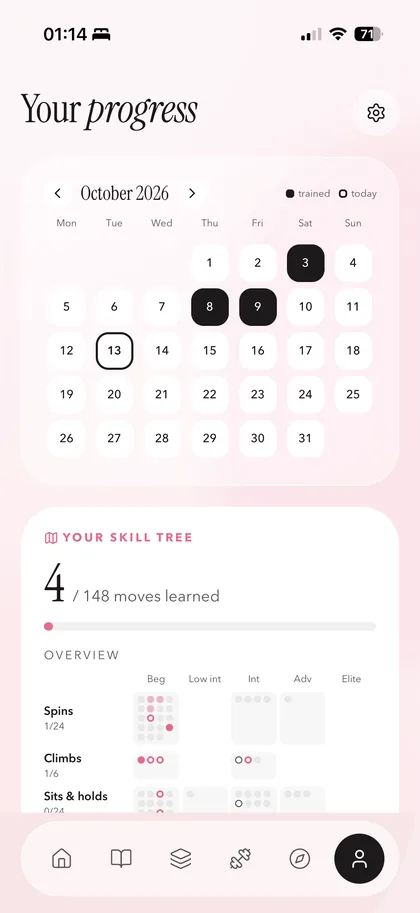
Between classes, Coquet, our pole dance app, helps you remember what you learned: the move library lets you look up the moves you were taught by name, with the cues and common mistakes for each, so you arrive at the next class remembering what you did. Once you start, two or three sessions a week is plenty; our article on how often you should pole dance explains why, and pole dance for beginners lays out your first eight weeks.
Frequently asked questions
Am I too old to start pole dancing?
There is no age at which beginner classes stop being suitable, because they start from zero and progress at your pace. If you have a health condition or a past injury, check with a doctor or physiotherapist first and tell your instructor.
How much does a pole dance class cost?
It depends heavily on the city and studio. Beginner courses paid up front are usually cheaper per class than drop-ins, so compare the price per class.
Can I start pole dancing at home?
You can start conditioning and flexibility at home, but learning on the pole is safer in a class, especially climbs and inverts. Consider a home pole after a few months of lessons.
Can I learn pole dancing with an app?
An app is a good companion to classes, not a replacement for them: it can show you the cues, the order of moves and what to train next, but it can't spot you on a climb. Our comparison of the best pole dance apps covers what each one does well, Coquet included.
Do I need to be fit to start pole dancing?
No. Beginner classes are designed for people starting from scratch, and pole itself builds the strength you need.
Coquet for iPhone · private beta
Know exactly what to train next
- 148 pole moves with levels, technique cues and common mistakes
- Week-by-week programs for goals like your first invert
- Slow motion, frame step and a move map of what you are ready for
Founding members get in first and keep the launch rate.